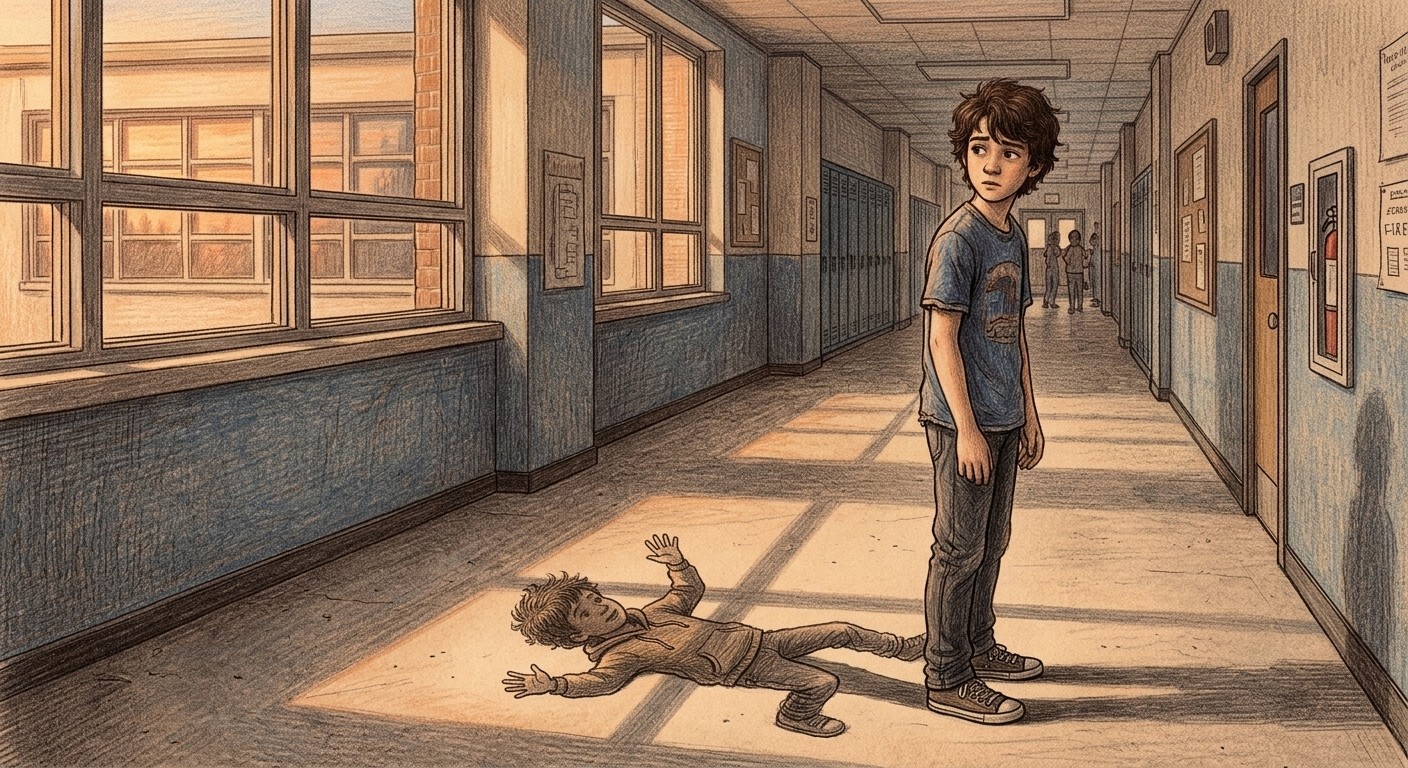
At a school event recently, I watched our 14-year-old sprint across the room, tracking his middle brother's every move. He wasn't playing—he was hyper-focused on making sure his brother didn't make a scene or get overwhelmed. By the time he caught up, the stress caught up with him too. He stood there in the middle of the crowd, overwhelmed to the point of tears.
Our oldest is only 14, but around his brother, he carries himself like an adult. He constantly scans public spaces, watching for safety triggers, anticipating meltdowns, and worrying about how strangers view our family. He has admitted how hard it is to figure out how to react when his brother is acting up or just being his normal neurodivergent self.
We've had open conversations with him about his brother's diagnosis, but understanding a condition on paper is different from accepting the public pressure that comes with it. I think deep down, he just wants his brother to "act normal" and "be normal." As parents raising three boys, watching this weight land on our eldest's shoulders has been one of our hardest challenges. We want him to be a caring big brother, but we want him to enjoy and appreciate his life as a teenager, too.
It also brings up a heavy layer of parental guilt. When so much of our daily focus and emotional bandwidth naturally goes toward supporting our middle son's needs, it is easy to worry about what our eldest is missing out on—and what carrying this anxiety might cost his own mental health over time. I'm proud of who he is becoming.
We didn't ask him to step into this role. There was no assignment or expectation. He simply saw a need early on and stepped into the gap because he cares so deeply.
Now, our job as parents is to gently step back into that gap for him—reminding him that managing public perception and keeping his brother regulated isn't his job. He doesn't have to be his brother's keeper. He just gets to be a teenager, a big brother, and his own person, too.